I have visited Italy five times and cannot seem to get enough of it. I am drawn to the culture that honors beauty in both art and everyday life. La bella vita is about slowing down, enjoying delicious food, lingering over conversation, and ending the day watching the sun slip below the horizon.
It's less about adding to life and more about being present to it.
One of my favorite stops in Italy is Florence's Galleria dell'Accademia, where Michelangelo's David is on display.
After visiting there with my husband a few years ago, I was excited to share it with my children last November. They thought it was humorous that I was so enthusiastic about a sculpture of a naked man.
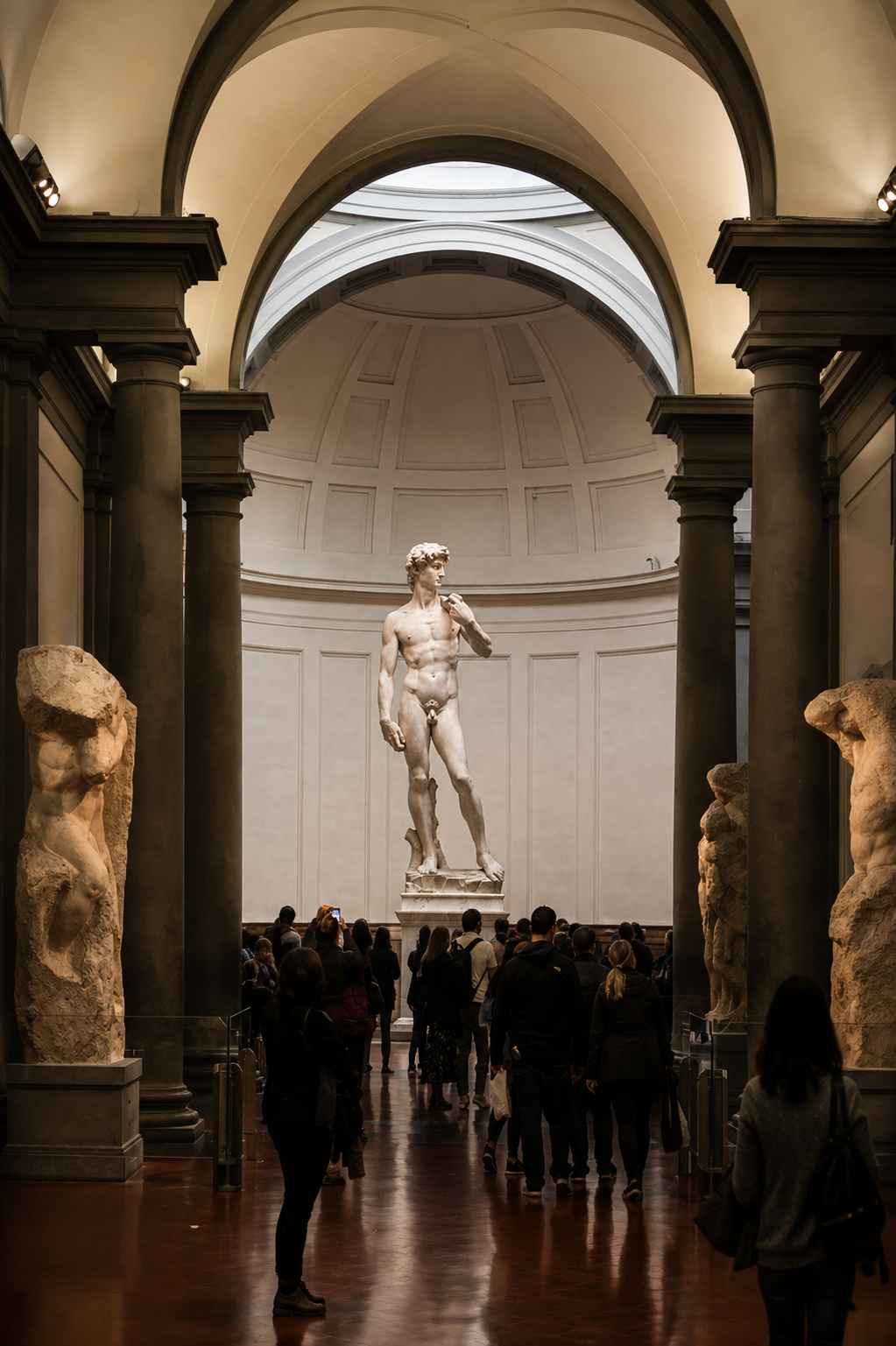
We purchased timed tickets and waited outside for our turn to enter. When we finally stepped inside, we rounded a corner into a long hallway lined with unfinished Michelangelo sculptures known as The Prisoners.
Before there was David, there were prisoners waiting to be released.
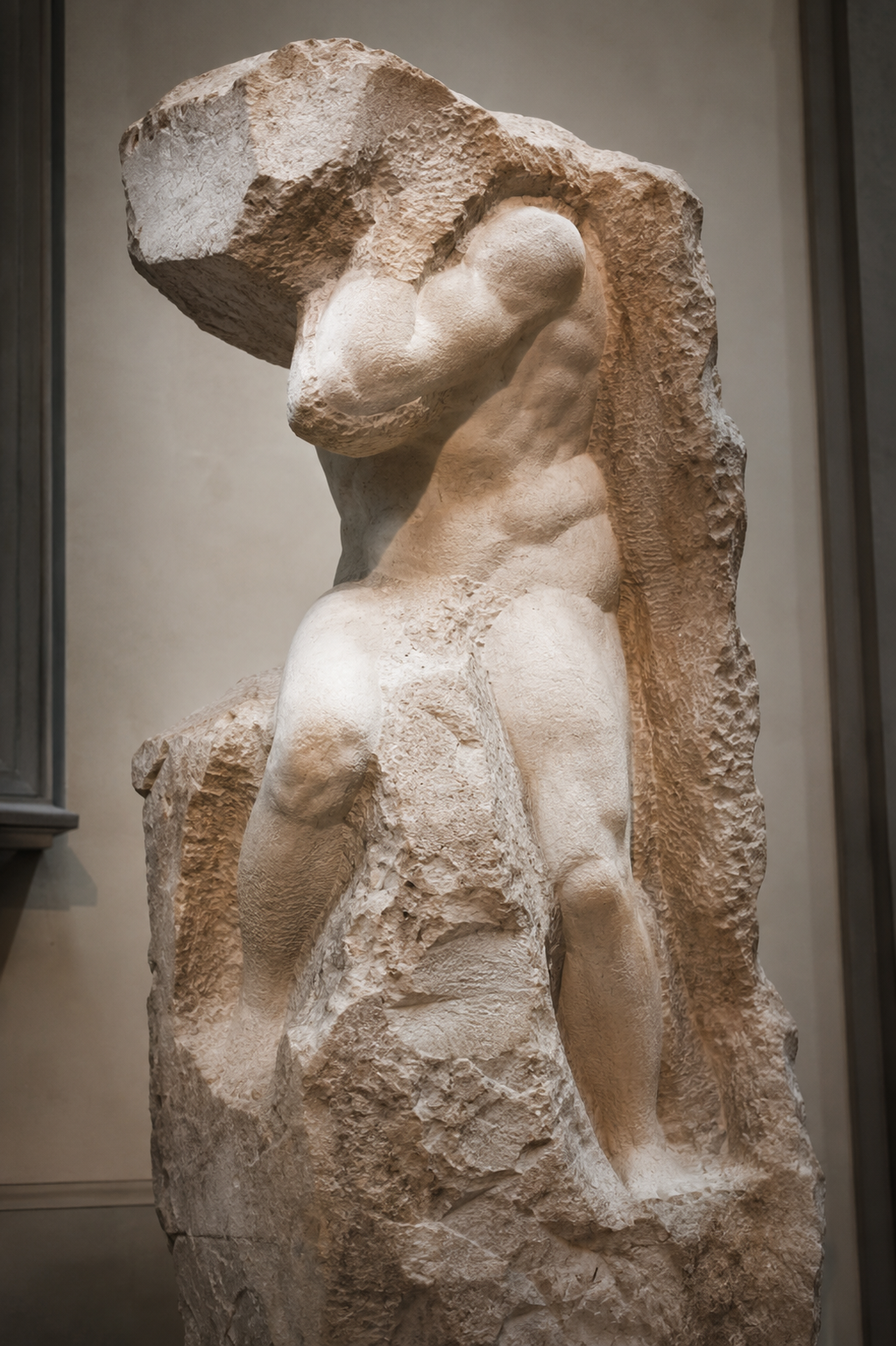
The figures appear trapped. A shoulder pushes through the marble, an arm reaches forward, a leg strains to break free while the rest of the body remains buried in stone. Even centuries later, you can still see the grooves left by Michelangelo's chisel, as though the figures have always been there, waiting to be released but never given their freedom.
At the end of the corridor, the space opens into a soaring, light-filled gallery where David stands alone beneath a domed ceiling.
The sculpture is stunning.
It took my breath away.
Something about the statue was stirring, almost spiritual. Tears filled my eyes.
It didn't look like marble.
It looked alive.
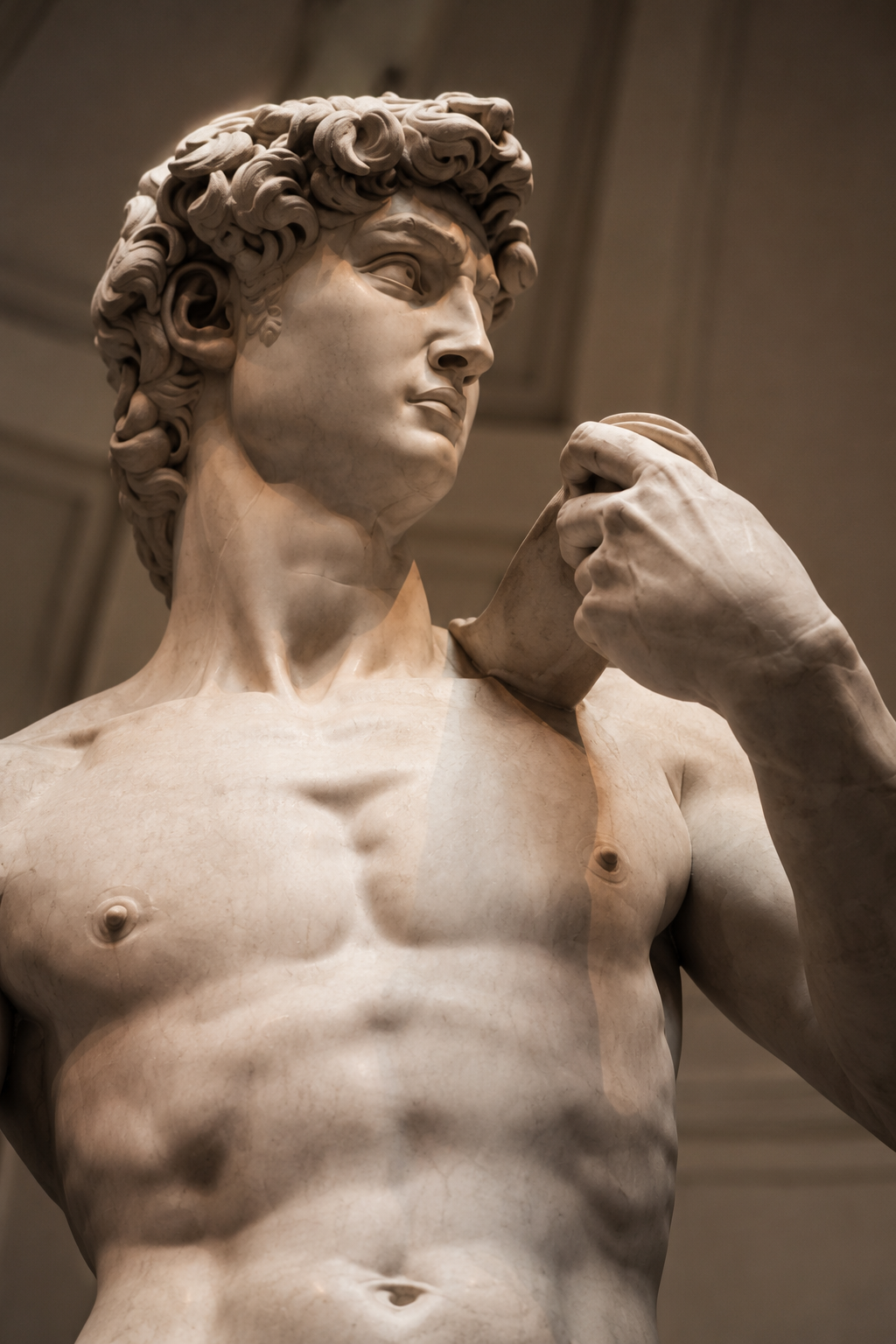
Veins rose gently beneath the surface of the stone, muscles tightened across his shoulders and forearms, tendons stretched beneath his skin. His weight rested naturally on one leg while the other relaxed, as if he might shift his balance or take a step at any moment.
Even his expression seemed to carry quiet resolve.
I couldn't stop wondering how someone could breathe so much life into a block of stone.
There is an idea often associated with Michelangelo that the figure already existed inside the marble and the sculptor's task was simply to uncover it.
Whether Michelangelo actually said the words often attributed to him doesn't matter much to me.
The idea does.
David wasn't built by adding anything to the marble.
He emerged because something was taken away.
Standing there, I started thinking about how often I approach my own life in exactly the opposite way.
More goals.
More commitments.
More expectations.
More ways I should be doing things better.
I've seen the same thing in coaching.
A mother already stretched thin hears about family dinners and thinks, We should do that.
Someone mentions gratitude journals.
I should do that.
Date nights. Meal planning. Meditation. Exercise. Reading with the kids. Volunteering. Less screen time. More connection.
Almost all of them are good ideas. That's what makes it so difficult. There are infinite good things we could add to a life.
But I'm becoming less convinced that every good thing belongs in mine.
I've started paying attention to one word in particular. Should. Sometimes should points toward something I genuinely value.
But sometimes it is simply evidence that I've absorbed someone else's idea of what a good mother, wife, friend, or person is supposed to look like. And every time I accept one of those ideas without examining it, another layer goes onto the marble.
This has changed the question for me.
Instead of: Should I do this?
I'm trying to ask: Does this belong in my life?
Sometimes the answer is yes. Sometimes what belongs is difficult or inconvenient. Sometimes becoming who we want to be really does require adding something new: a skill, a commitment, a responsibility we would rather avoid.
Every yes occupies something. Time. Attention. Energy. Space.
And those things are finite.
Maybe that's why saying no can feel so uncomfortable. We can see the thing we're refusing much more clearly than the thing we're protecting.
Standing in the Accademia, though, no one was mourning the missing marble.
We were looking at David.
As I left the museum and walked back into the streets of Florence, I kept thinking about the Prisoners.
Those half-finished bodies still caught inside the stone.
And then David at the end of the hall, completely exposed.
For so much of my life, I've assumed growth would look like adding something. Now I'm wondering if some of the most important work might look almost exactly the opposite.
Not what else should I become?
But What am I willing to take away so something truer can emerge?