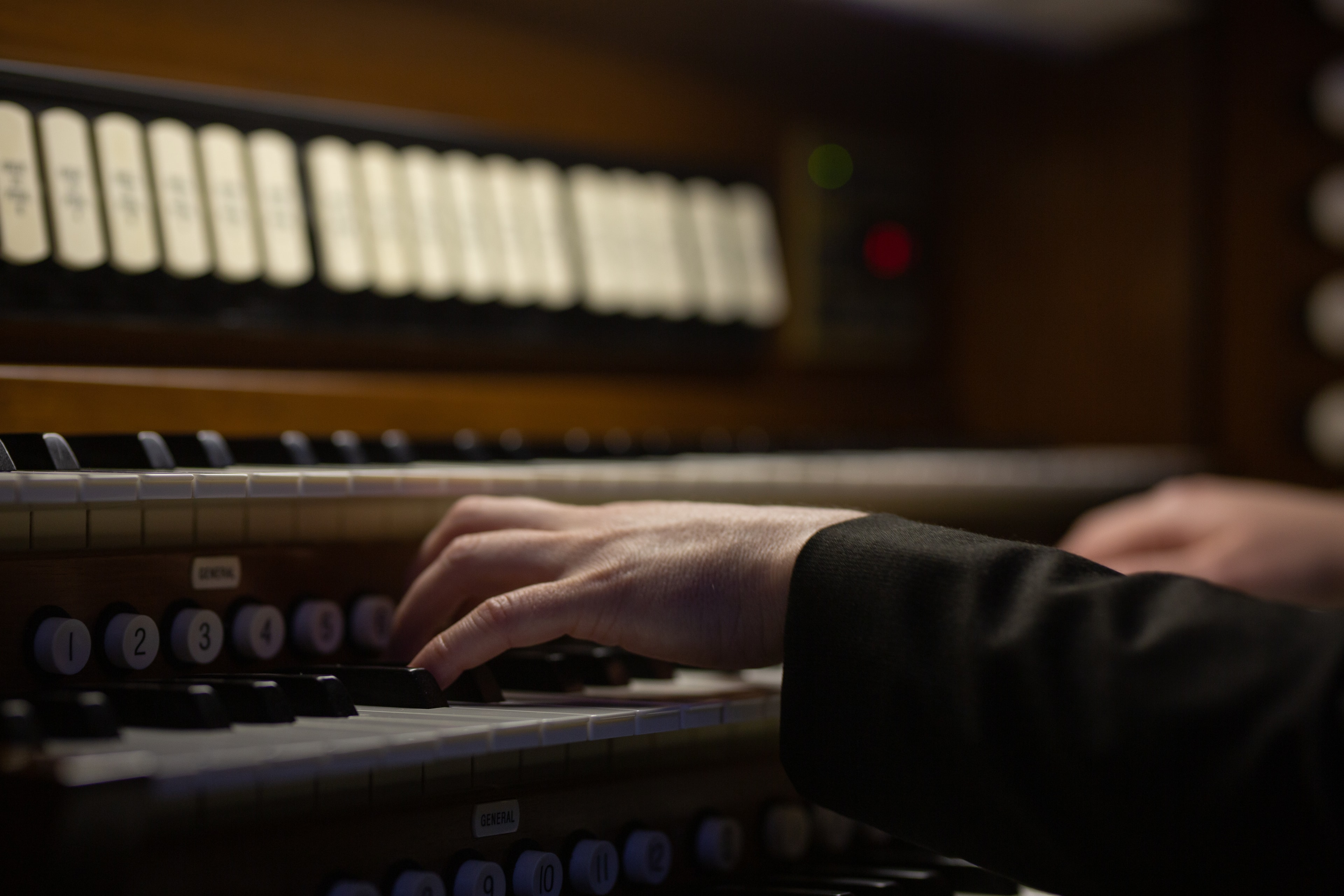
Light streamed through the stained-glass windows, breaking into color as it touched the stone floor - reds, blues, and golds scattered like fragments of fire across the sanctuary. In that quiet glow, a Bach fugue began to unfold around us. Not as a single sound, but as something layered and alive. The music didn't come from one place so much as it filled the space, as if the church itself had learned to sing.
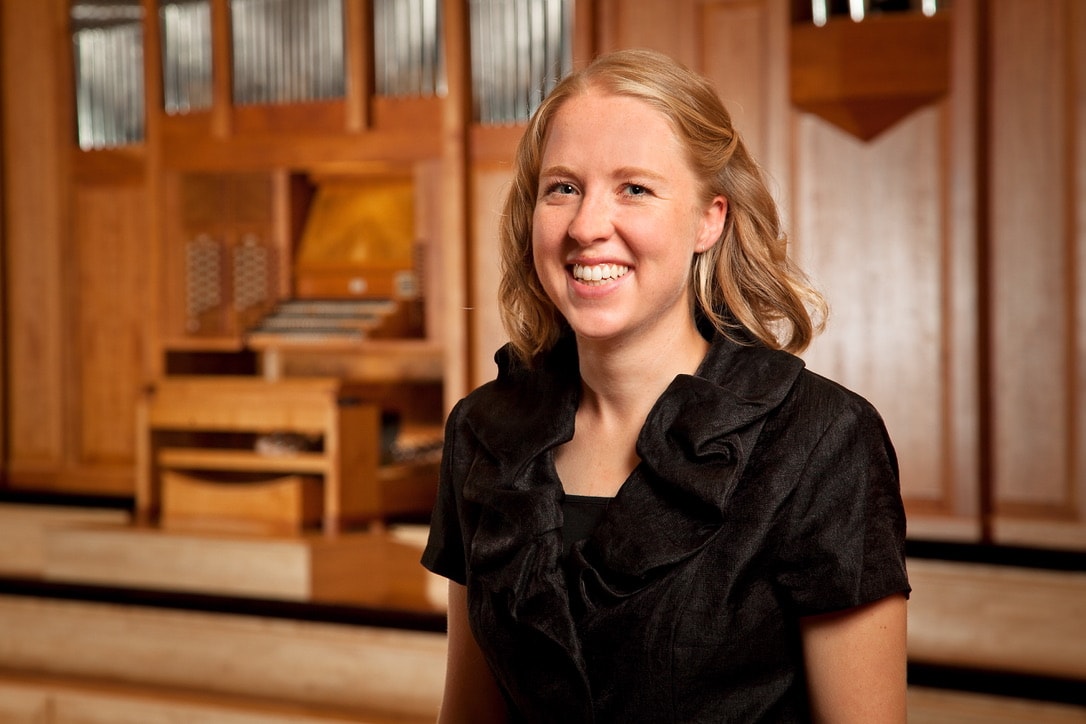
I looked up to the platform where my sister sat at the organ console, hands and feet moving with a coordination that still feels impossible to me. She has a Ph.D. in organ performance, the result of years of practice and long hours of rehearsal. She has spent a lifetime learning not just the notes on the page, but how to shape them so the music feels alive. In a fugue, every voice must stay clear, but also fit into something larger. Every entrance matters. Every ending carries weight.
When the prelude ended, the final chord settled into the stone and the room went quiet for just a moment before the congregation applauded. Then the choir, dressed in deep crimson robes, began a hymn. The organ shifted beneath them - no longer intricate lines, but wide, steady chords holding the voices up. The sound grew as the congregation joined in. It wasn't just music. It was worship.
I thought about something I had recently learned. There are organs now that can play themselves. They don't miss notes or lose their place. They don't rush or slow down. They don't get nervous or have bad days. If perfection were the goal, they would outperform a human.
For a moment, I wondered if my sister's career was at risk. The thought disappeared almost as quickly as it arrived.
Of course it isn't. People don't come to church to hear mechanical perfection. They come to feel something. A robot can play every note of a Bach fugue, but it cannot choose to slow down because the room feels heavy with grief. It cannot soften the sound so a choir feels held instead of exposed. It cannot lift a chord with joy because it's Easter morning. It cannot pray through the music.
Humanity makes the difference.
That thought comes back to me often in my coaching work. Just recently, a mother looked at me and whispered,
"I yelled again."
To her, that one moment erased everything else she had done that week.
I hear versions of that same conversation all the time.
Parents carrying invisible scorecards.
"I forgot back-to-school night."
"I burned the lasagna."
"I handled that wrong."
"I can't do enough."
Somewhere along the way, many of us begin grading ourselves like robots.
Did I say the right thing?
Did I stay calm?
Did I respond the way I was supposed to?
Every mistake starts to feel like failure.
But what if we've misunderstood what our children actually need?
What if perfection was never the goal?
What if something else matters much, much more?
Imagine, for a moment, a perfect robotic parent. It never raises its voice. Never forgets back-to-school night. Never burns the lasagna. Never gets impatient. Never says the wrong thing. Every response is calm. Every consequence is measured. Every decision is correct.
Would you trade your child's relationship with you for that robot?
Of course not.
Because deep down, we already know something our perfectionism tries to hide. Children are not looking for flawless performance. They are looking for a person.
A person who laughs so hard milk comes out their nose. A person who cries during movies and doesn't bother to hide it. A person who gets overwhelmed sometimes, but comes back later and says, "I'm sorry." A person who pulls them into a hug that lasts a little longer than usual because something inside whispers, they won't always fit here.
Those moments are not interruptions to good parenting. They are good parenting.
Connection is not built by being flawless, but by being real. We don't bond over perfection. We bond over honesty, vulnerability, and the courage to be seen as we are.
Children don't need impressive parents. They need real ones.
Real means showing up with strengths and weaknesses. With needs. With limitations.
With humanity.
And one of the most powerful moments in parenting is something a perfect parent would never experience: repair.
"I'm sorry."
"I was wrong."
"Will you forgive me?"
These moments teach humility, grace, forgiveness, and resilience in ways perfection never could.
Our children don't need to see parents who never make mistakes. They need to see what love does after mistakes are made.
A robot never has to apologize.
A robot never gets the chance to make things right.
As the final hymn ended that morning, the sanctuary grew quiet again. The last chord of the organ lingered just long enough to settle into the stone before fading into silence. No one left talking about perfect counterpoint or flawless execution. They talked about how the music made them feel.
Maybe our children do the same.
Years from now, they won't remember every perfectly packed lunch or every mistake we wish we could erase. They will remember how it felt to be loved. How it felt to be safe. How it felt to come home.
My sister's career is safe because people were never coming for the notes alone. It was always in the person playing them.
Maybe our children have known that all along.
They were never looking for perfection.
They were looking for us.