We moved into our first house in the spring. The tulips were just beginning to push through thawing earth, and the lawn was starting to green. We were thrilled to finally have a yard of our own.
Oh, how naive we were.
As the weather warmed, the grass began to struggle. Not all of it, just enough that I noticed every time I pulled into the driveway. It was the kind of lawn that always seemed to be apologizing for itself.
So I did what any reasonable homeowner would do: I Googled.
"How to revive a dying lawn."
"How to make grass greener."
"How to repair dead spots."
One article recommended fertilizer, so I bought fertilizer. Another suggested a different fertilizer worked better, so I bought that one too. Someone else recommended aeration, so I scheduled it.
Then I became convinced the soil itself must be the problem.
Soon a dump truck arrived carrying a mountain of topsoil. My husband was in a very busy stretch at work, but he still came out to shovel. The kids grabbed rakes, and even the neighbors wandered over to help. For hours we spread fresh dirt across the yard until the struggling grass disappeared beneath it.
I remember standing back, sweaty and hopeful, thinking: Surely this will work.
It didn't.

One afternoon a friend drove by, rolled down her window, and said, "Your lawn needs water."
I almost laughed.
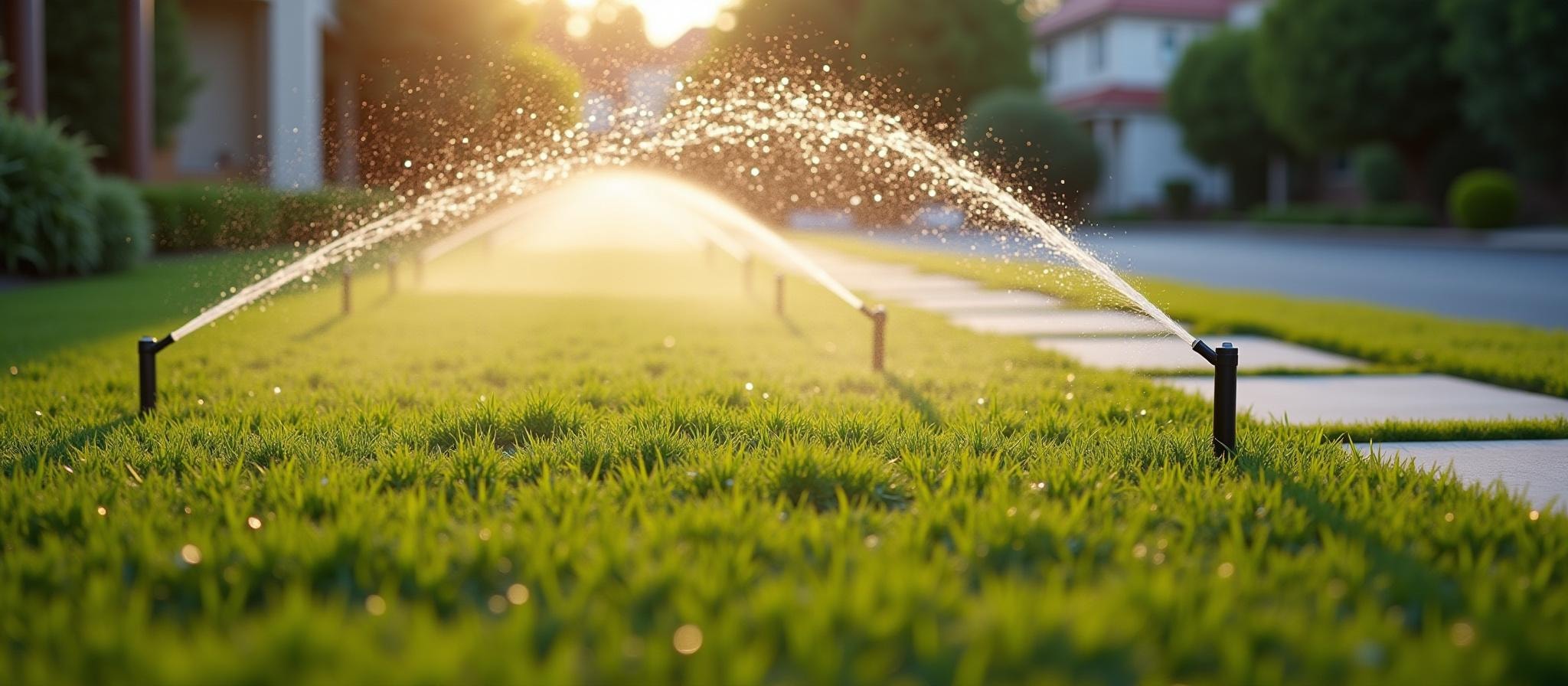
"We have a sprinkler system. It runs three times a week."
She smiled. "Your lawn needs more water."
That couldn't possibly be it. I had spent weeks researching, hundreds of dollars, countless hours. And still, the simplest answer (the one that kept appearing first in every search) felt too easy to be right.
Still, I had nothing to lose.
So I doubled the watering days, then the watering time.
Within a week, everything started to change. Green spread where brown had been. Thin patches filled in. The lawn simply started doing what healthy lawns do.
It flourished.
I've thought about that summer often, especially during a session with a woman who was frustrated with her husband.
Earlier that week, she had shouted at her son after noticing his tiny fingers still inside the car door as she closed it. He cried. Dinner that night was quiet. Her husband did not like how she had handled it.
Later she said, "I just needed some support."
As we talked, another picture emerged. She worked all day. She still read to her son every night. She cleaned because order helped her breathe. She loved her son fiercely.
"So your husband doesn't support you?" I asked.
She looked surprised.
"Most of the time he does."
That answer changed the conversation.
I asked why she had yelled.
She looked down. "I didn't want him to get hurt."
There it was.
The yelling still mattered. Her son had still been frightened. Her husband wasn't wrong for being bothered by it.
But there was something else in the room too.
Fear.
She hadn't yelled because she didn't care. She had yelled because she cared so much and, for thirty seconds, fear had taken over.
I found myself wondering what it would even look like for her husband to give her the reassurance she wanted in that moment.
He had not lived her Thursday.
He had not carried the invisible negotiations she had been running since morning: when to be patient, when to let something go, when to hold on a little longer than she had energy for. He had not seen the nineteen small decisions to stay calm before the twentieth one broke.
He had only seen the thirty seconds at the car door. She had lived the whole day.
And the truth is, he did support her. He was there. He cared.
But he could never know everything she already knew about herself.
I started wondering whether we sometimes ask other people to give us something they can only ever see part of.
Reassurance matters. There are times when another person's words reach us in ways our own cannot.
But there are other times when we keep waiting for someone else to tell us we're doing okay when they have only fragments of the evidence.
Like birthday money, encouragement is real and generous and often deeply appreciated. But it was never designed to pay the bills.
This mom knew about the nineteen times she had stayed calm. She knew she had read a second story when she was exhausted. She knew why the house was clean.
She knew what happened at the car door, and she also knew everything that had happened before it.
Maybe she didn't need her husband to tell her what kind of mother she was. Maybe she already had more of the answer than she was able to access in that moment.
I think about this sometimes in my own life.
How easily I look outside myself for confirmation of something I am in a much better position to know.
Am I doing enough?
Am I getting this right?
Am I okay?
Sometimes I genuinely need another person's perspective. Sometimes I'm wrong about myself. Sometimes the people who love me can see something I can't.
But sometimes I wonder if I'm standing in the middle of my own dying lawn, searching for another treatment because the obvious answer feels too simple.

These days, people compliment our lawn and ask what we did to it, as if there is a secret. Sometimes, when the sprinklers come on at dusk, I find myself standing in the driveway longer than I mean to.
Just watching the water.