
A few years ago, we spent Thanksgiving in Paris. It was wonderful. Coming home was less wonderful. We were exhausted, jet-lagged, and still facing a long drive after the flight. By the time we finally pulled into the driveway, it was after dark, and I wanted only the most basic things: to bring in the suitcases, brush my teeth, and find my bed.
Instead, before we even opened the door, we could hear a deafening chorus of noises coming from within. When we opened the door, every smoke alarm in our house was going off. Not chirping. Screaming.
We have a lot of smoke detectors, and they are interconnected. If one detects a fire, they all sound the alarm. This is, generally speaking, an excellent feature. On this particular night, it was less excellent. We didn’t know how long they had been going off, why they were going off, or whether there was smoke somewhere we couldn’t see or, more frighteningly, carbon monoxide.
So instead of going to bed, we started investigating. We checked the house, tried to figure out which alarm had started it, took detectors down, replaced batteries, pushed buttons, and Googled things. At some point, we called the fire chief. He happened to be an expert on carbon monoxide, which seemed like exactly the person we needed. I think we were hoping he would ask us a few questions and tell us we could safely go to bed.
He did not.
Instead of putting our minds at ease, the conversation left us more concerned, so we kept investigating. Every time we thought we had fixed it, the alarms started again. Eventually, we were beyond tired, so we gave up. There is some irony in dismantling your entire fire detection system because you have concluded that dying would be preferable to spending another minute awake. But at that point, all we wanted was to make them stop.
Ultimately, we discovered there was no fire and no carbon monoxide. One smoke detector had simply gone bad. But because the detectors were designed to listen to each other, one faulty alarm had convinced the entire house that there was an emergency.
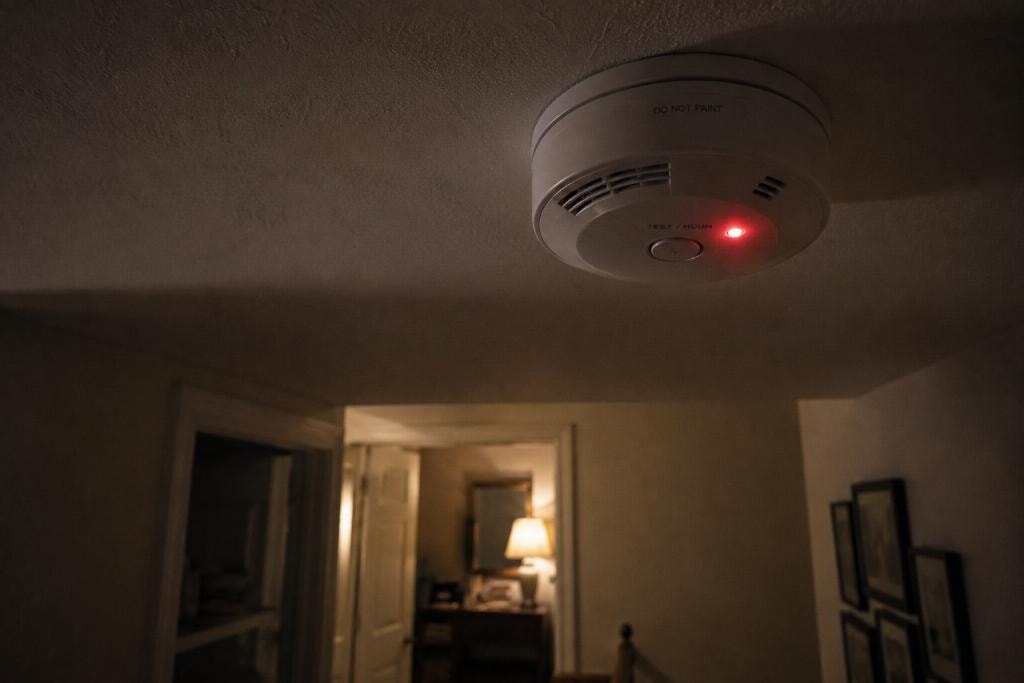
I’ve thought about that night a lot, especially because I teach a lot of tools in coaching. I teach people to notice their thoughts and understand how those thoughts affect what they feel and do. I teach emotional regulation, and I teach people to question stories that may not be serving them. I teach them to recognize what is within their control and what isn’t, and to use their energy where it will be most useful.
These are good tools.
I believe in them.
But I’ve also watched good tools turn into weapons.
Once we learn that our thoughts affect our feelings, it is surprisingly easy to decide that we should have better thoughts. If I know how to question a thought, why am I still thinking this? If I know how to regulate myself, why am I so upset? I know better than this. I shouldn’t be here again. I should be more grateful. I should think positively. I should be calm. I should be able to handle this.
Suddenly, a tool that was supposed to help us gain awareness and understanding has become another way to judge ourselves. One alarm goes off, and then all the others join in.
Now I’m not only angry — I’m angry that I’m angry.
I’m not only anxious — I’m worried that I shouldn’t be anxious.
I’m not only struggling — I’m disappointed that, after all this work, I am still the kind of person who struggles.
The original emotion may have been useful information, but now the whole house is screaming.
I don’t think the answer is to throw away the smoke detectors. I don’t think the answer is to stop noticing our thoughts, regulating our nervous systems, or questioning the stories we tell ourselves. The smoke detectors in our house really could save our lives. But they are useful because of what they are designed to do: they alert us, give us information, and invite us to look. They are not supposed to become the emergency.
Maybe our tools deserve the same restraint.
A thought is something I can notice without immediately correcting it.
An emotion is something I can feel without making its presence evidence that I have failed.
Sometimes I will know exactly how I want to respond and still respond differently.
Sometimes I will find myself standing in territory I was quite certain I had already crossed.
Sometimes I will know better and not do better.
That doesn’t necessarily mean the tools aren’t working, and it doesn’t necessarily mean I need another tool. Maybe I just need to notice what is happening without setting off every alarm in the house.
There is something wonderfully gentle about a tool that remains a tool. It can help me see, help me understand, and help me choose. But it doesn’t ring in my ears and keep me awake way, way too long.